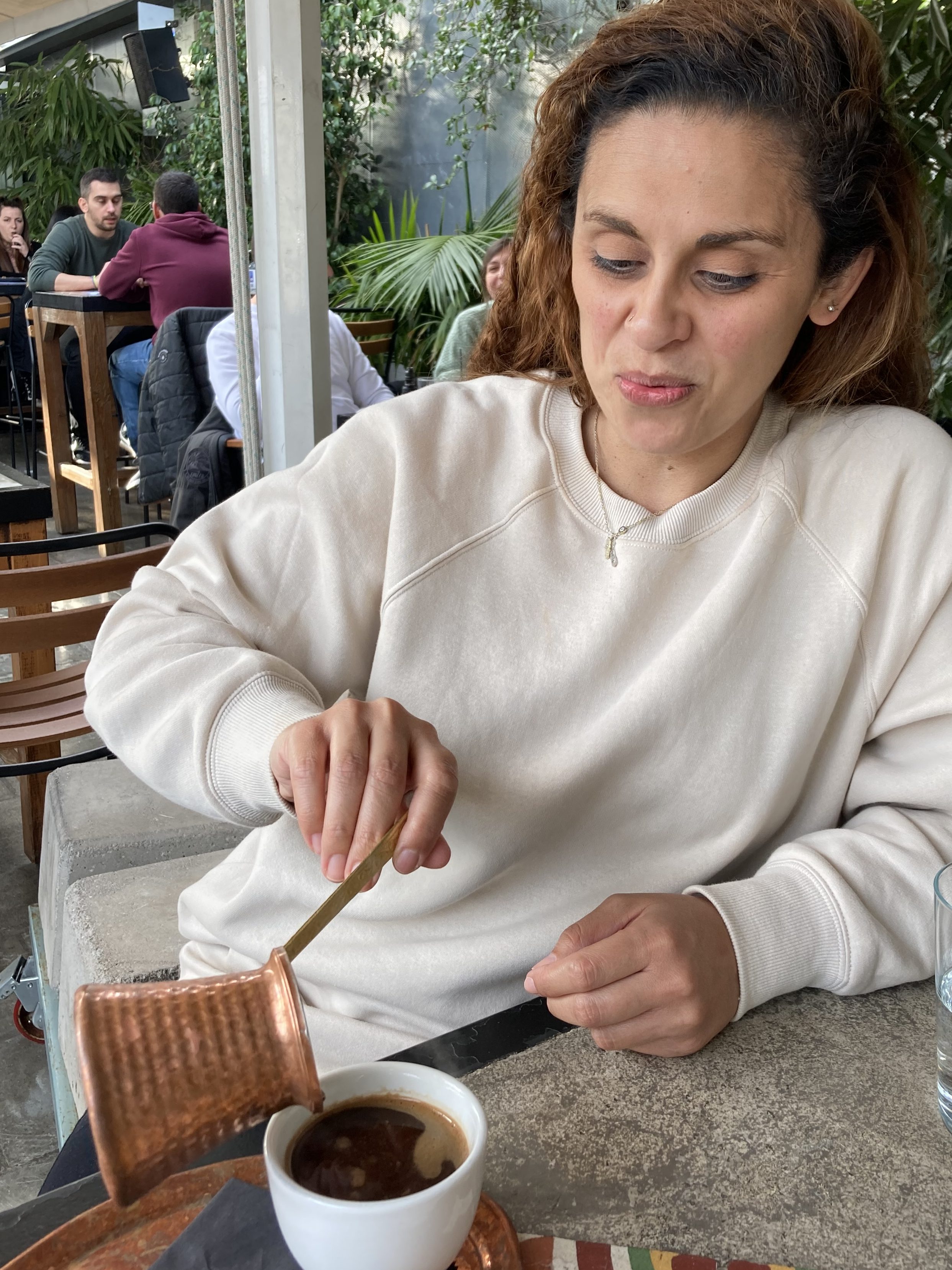
a briki is a small long-handled pot used to make coffee
coffee made with this pot, and in this style, is most common in Armenia, Greece, Turkey/Türkiye, and throughout Eastern Europe and the Balkans (these two regions have some overlap–)
coffee made with this pot, and in this style, is often referred to as Greek or Turkish coffee
a briki is a small long-handled pot used to make coffee
the pot is traditionally made of brass or copper; however, nowadays, it is routinely made from stainless steel, aluminium, or ceramics
briki – Greek; cezve – Turkish — term referenced in two previous coffee lessons (#25 and #24)
similar to, at times argued to be the same as, Turkish Coffee
a particular way to brew, serve, prepare coffee . . .
coffee is prepared in a briki, using very finely ground coffee beans without filtering
briki: a small pot with a long handle, traditionally made of copper or brass
coffee brewed with very finely ground coffee beans
when served, do not drink the entirety of the serving–in this preparation coffee grounds are not removed from the coffee when served
coffee preparation style that can be found throughout the world, though it has particular prominence in Turkey/Türkiye, Greece, Armenia, Eastern Europe, and the Balkans
Greek v. Turkish Coffee: similar to one another, argued to be exactly the same . . . however:
Greek coffee tends to be lighter roast
Both can be sweetened, but generally Turkish coffee will add sugar directly into the cevze (“briki” in Greek), while Greeks add sugar afterward . . .
In my experience Greek coffee was larger–had more that I could actually drink. When I ordered Greek coffee I was always asked if I wanted sugar, and then how much or what kind (sketos/black; metrios/semi-sweet); glykos/sweet). When I ordered and received my Greek coffee, it was generally served alone, sometimes an unsweetened cookie might be served with it, it was just the coffee; whereas, in Turkey, Turkish coffee was almost always served with something sweet (Turkish delight).
a particular way to brew, serve, prepare, coffee originating in the former Ottoman Empire (modern day Turkey/Türkiye)
coffee is prepared in a cezve using very finely ground coffee beans without filtering
cezve (“briki” in Greek): a small pot with a long handle, traditionally made of copper or brass
coffee brewed with very finely ground coffee beans
when served, do not drink the entirety of the serving–in this preparation coffee grounds are not removed from the coffee when served
the grounds left in the cup after drinking are sometimes used to tell fortunes
coffee preparation style that can be found throughout the world, though it has particular prominence in Turkey/Türkiye, Greece, Armenia, Eastern Europe, and the Balkans


 Cups and Comments